
When Should You Replace Your Car Battery? 10 Warning Signs Every New Zealand Driver Should Know
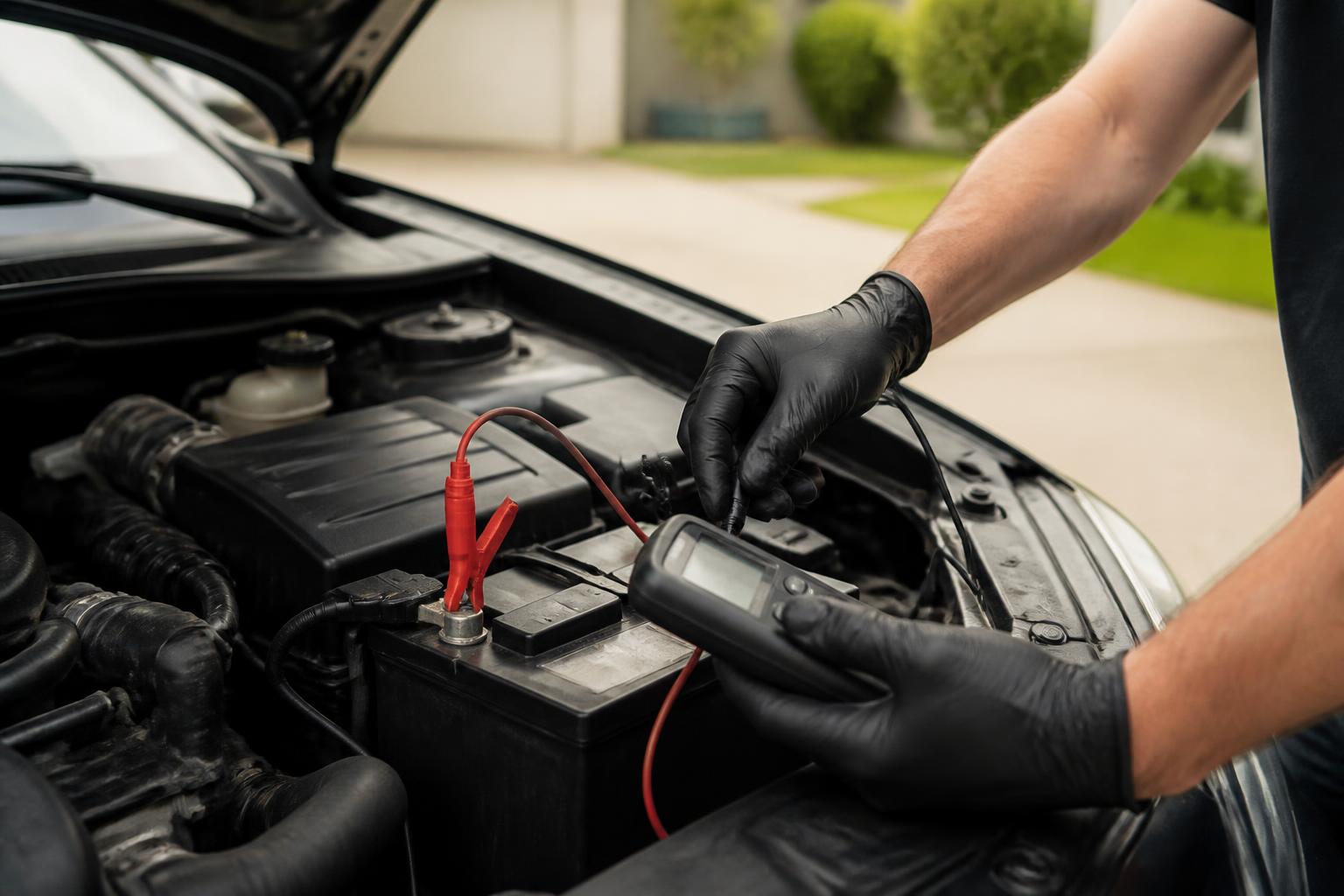
Your Car Battery Rarely Fails Without Warning
Most people never think about their car battery—until the morning their car won't start.
You're already running late for work. You climb into your vehicle, turn the key or press the start button...
Click.
Or perhaps nothing happens at all.
Unfortunately, this is one of the most common call-outs mechanics receive, and in many cases, it could have been prevented.
Your battery is one of the hardest-working components in your vehicle. Every time you start your engine, it delivers a large burst of electrical power to crank the engine before the alternator takes over.
It also powers:
- The starter motor
- Dashboard electronics
- Central locking
- Security systems
- Interior lighting
- Infotainment systems
- Electric windows
- Navigation
- Computers and sensors
Modern vehicles rely on electronics more than ever before, meaning today's batteries are working harder than they did twenty years ago.
The good news?
Most batteries provide warning signs before they completely fail—you simply need to know what to look for.
How Long Should a Car Battery Last?
There isn't a single answer.
In New Zealand, most quality vehicle batteries last between 3 and 5 years.
However, we've replaced batteries that failed after only two years and seen others last seven years or more.
Battery life depends on several factors including:
- Driving habits
- Vehicle type
- Battery quality
- Climate
- Electrical load
- Maintenance
If your battery is approaching four years old, it's sensible to have it tested rather than waiting until it fails unexpectedly.
Replacing a battery at a convenient time is far less stressful than needing roadside assistance in the rain.
What Actually Wears Out Inside a Battery?
Many people assume batteries simply "go flat."
In reality, the battery slowly loses its ability to store and deliver electricity.
Inside the battery are lead plates immersed in an electrolyte solution.
Over time these plates deteriorate through normal chemical reactions.
As they age:
- Capacity decreases
- Starting power reduces
- Charging becomes less efficient
- Internal resistance increases
Eventually, even though the battery may still show around 12 volts, it no longer has enough power to crank the engine.
This is why a battery can appear perfectly fine one day and fail the next.
10 Warning Signs Your Battery May Need Replacing
1. The Engine Cranks Slowly
This is often the very first warning sign.
Instead of starting instantly, the engine turns over slowly.
You might notice:
"Rrrr... rrrr... rrrr..."
before finally starting.
This usually becomes more noticeable on cold mornings.
Don't ignore it.
Slow cranking nearly always means the battery should be tested.
2. You Need a Jump Start
If you've had to jump-start your vehicle more than once, don't assume it's simply because you left the lights on.
A healthy battery should recover from an accidental flat battery.
If it keeps going flat, something else is likely happening.
Possible causes include:
- An ageing battery
- Faulty alternator
- Electrical drain
- Corroded terminals
- Loose battery connections
A proper diagnosis will identify the actual cause.
3. Dashboard Warning Lights
Modern vehicles constantly monitor the charging system.
You may notice:
- Battery warning light
- Charging system warning
- Electrical system warning
These warnings don't always mean the battery itself has failed.
Sometimes the alternator is no longer charging correctly.
Other times there's an electrical connection problem.
The only way to know is through proper testing.
4. Headlights Are Dim
If your headlights seem noticeably dimmer than usual—particularly before the engine starts—it may indicate the battery is struggling.
You may also notice:
- Interior lights dimming
- Slow electric windows
- Weak air conditioning fan
- Sluggish infotainment system
- Flickering dashboard
Modern vehicles require stable voltage.
As voltage drops, electrical systems begin behaving strangely.
5. Clicking Noise When Starting
You turn the key.
Instead of the engine starting...
Click.
Click.
Click.
This often means the battery has enough power to activate the starter relay but not enough to actually crank the engine.
Although the starter motor itself can also fail, battery issues remain the most common cause.
6. Electrical Features Stop Working Properly
Your battery powers much more than just starting the engine.
You may notice:
- Radio restarting
- Touchscreen freezing
- Electric seats moving slowly
- Mirrors behaving strangely
- Warning messages appearing
- Keyless entry becoming unreliable
These symptoms don't automatically mean the battery is faulty, but they certainly justify testing.
7. Battery Is More Than Four Years Old
Age alone isn't a reason to replace a battery.
However, once it reaches four years old, the likelihood of failure increases.
Many batteries have a manufacture date printed on the casing.
If you don't know how old yours is, a mechanic can usually identify it during an inspection.
8. Corrosion Around the Battery
Open the bonnet.
Look closely at the battery terminals.
Do you see:
- White powder
- Blue crystals
- Green corrosion
This build-up increases electrical resistance and can prevent the battery from charging correctly.
Cleaning the terminals may solve the issue.
Other times, corrosion is simply another sign the battery is reaching the end of its life.
9. Swollen Battery Case
A healthy battery should have straight sides.
If the case appears swollen or distorted, stop using it.
Heat, overcharging and internal failure can cause the casing to expand.
This battery should be replaced immediately.
Never attempt to open or repair a swollen battery.
10. It Smells Like Rotten Eggs
A strong sulphur smell usually indicates battery damage or overcharging.
This smell should never be ignored.
It may indicate:
- Internal battery failure
- Charging problems
- Electrolyte leakage
Arrange professional inspection immediately.
What Causes Batteries to Fail Early?
Many batteries fail long before their expected lifespan.
Common reasons include:
Short Trips
If you only drive five minutes to work every day, the alternator may never fully recharge the battery.
Over time the battery slowly loses capacity.
Leaving Accessories On
Interior lights.
Phone chargers.
Dash cameras.
Portable fridges.
These all continue drawing power.
Even a small electrical load over several days can flatten a battery.
Extreme Temperatures
Although New Zealand doesn't experience severe winters everywhere, cold mornings reduce battery performance.
Heat also accelerates internal battery deterioration.
Faulty Alternator
Many people replace the battery only to discover the alternator wasn't charging it properly.
Always test both.
Parasitic Battery Drain
Some electrical faults continue drawing power after the vehicle has been switched off.
Examples include:
- Faulty alarm systems
- Interior lights
- Boot lights
- Faulty modules
- Aftermarket accessories
Finding these drains often requires specialist testing.
Can I Test My Battery Myself?
Yes.
Many auto stores sell battery testers.
You can also check battery voltage with a multimeter.
However...
Voltage alone doesn't tell the full story.
A battery can show:
12.6 volts
...yet still fail under load.
Professional battery testing measures:
- Cold Cranking Amps (CCA)
- Internal resistance
- Voltage drop
- Charging performance
These tests provide a much more accurate picture.
Should I Replace the Battery Before It Fails?
In many cases...
Yes.
If your battery:
- Is over four years old
- Shows slow cranking
- Has failed a load test
- Has stranded you previously
Replacing it proactively often saves money, time and frustration.
Being stranded outside school, work or the supermarket is never convenient.
Can a Battery Damage Other Components?
Indirectly, yes.
Low voltage can affect:
- Engine computers
- Transmission electronics
- Sensors
- Security systems
- Start-stop systems
Modern vehicles are extremely sensitive to battery condition.
Some strange electrical problems disappear immediately after replacing a failing battery.
Common Myths About Car Batteries
"It started yesterday, so it must be fine."
False.
Battery failure often happens suddenly.
"Driving longer will recharge any battery."
Not necessarily.
If the battery is worn out internally, no amount of driving will restore it.
"A battery only dies in winter."
False.
Many batteries are actually damaged during summer heat.
Winter simply exposes the weakness.
Frequently Asked Questions
How long does it take to replace a battery?
Most battery replacements take less than 30 minutes.
Do I lose my radio settings?
Some vehicles retain settings.
Others may require clocks or windows to be reset.
Luxury vehicles sometimes require battery registration using diagnostic equipment.
Can I replace my own battery?
Some vehicles make this straightforward.
Others have battery monitoring systems that require specialised procedures.
Always check your owner's manual.
Why is my battery flat after sitting for two weeks?
Modern vehicles continue using small amounts of electricity even when parked.
If the battery is already ageing, two weeks may be enough to flatten it.
Does a new battery fix every starting problem?
No.
The issue could also be:
- Starter motor
- Alternator
- Loose connections
- Ignition switch
- Electrical faults
Diagnosis should always come before replacing parts.
Don't Wait Until You're Stranded
Most battery failures don't happen in your driveway on a sunny Saturday morning.
They happen:
- Outside work
- At the supermarket
- Before school drop-off
- At the airport
- During heavy rain
- On holiday
Recognising the warning signs early can save you time, money and unnecessary stress.
If your vehicle has been slow to start, your battery is more than four years old or you've recently needed a jump start, now is the perfect time to have it tested.
Replacing a battery before it fails completely is almost always more convenient than dealing with an unexpected breakdown.
Need a Battery Check? We Come to You
At Sonic On-Site Solutions, we provide mobile battery testing and replacement across Greater Auckland. Whether your vehicle won't start at home, outside your workplace or while you're out and about, we'll come to you and diagnose the problem.
- Battery testing
- Charging system checks
- Alternator testing
- Starter motor assessment
- Battery replacement (where required)
- Terminal cleaning and inspection
- Advice on preventing future battery failures
No towing. No waiting at a workshop. Just honest advice and professional service brought directly to your location.