
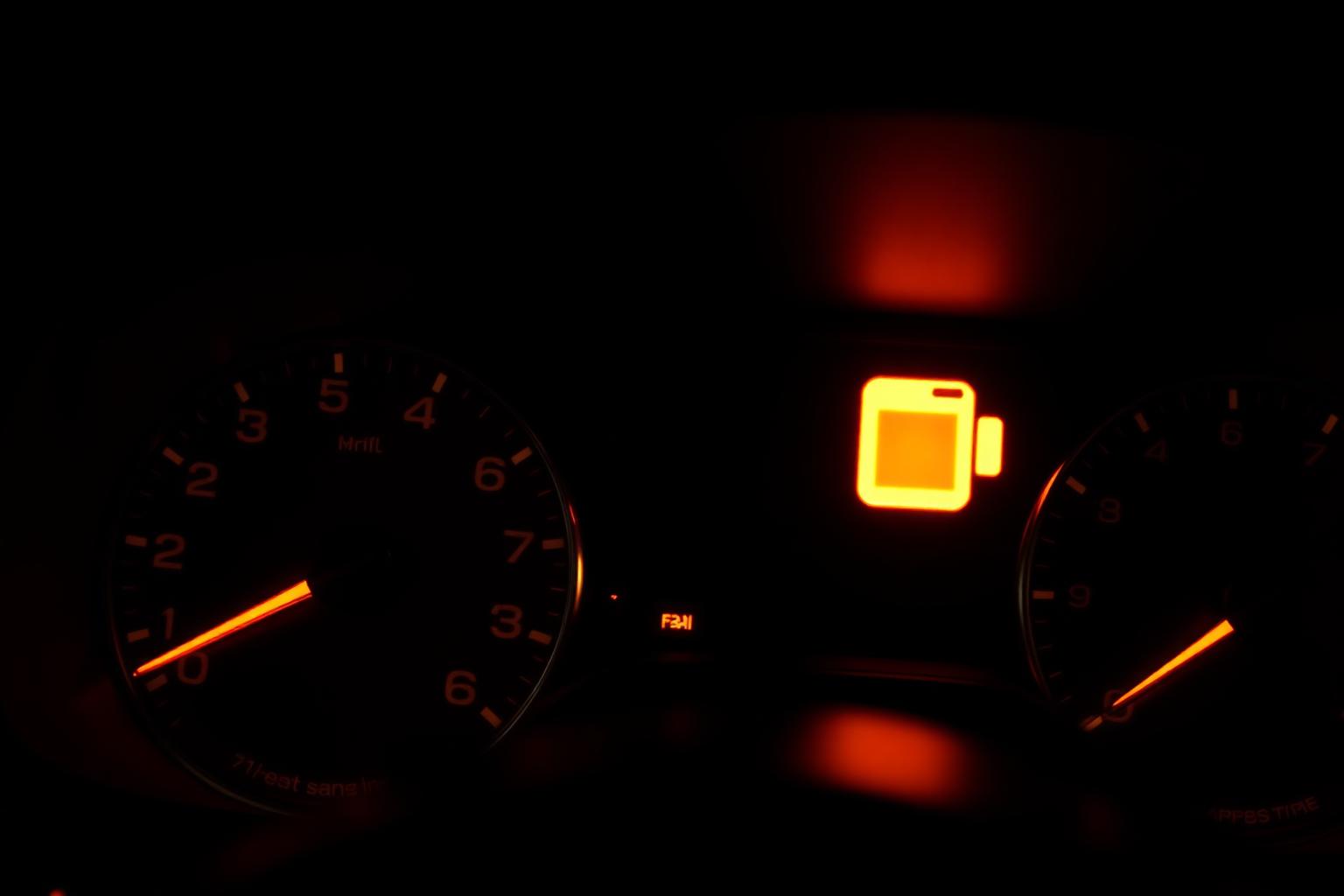
Few dashboard warnings create as much anxiety as the check engine light.
One moment your vehicle appears to be running normally. The next, a small amber engine-shaped symbol appears on the dashboard. You may immediately wonder whether the engine is about to fail, whether it is safe to continue driving, or how expensive the repair is likely to be.
The good news is that a check engine light does not automatically mean your engine has suffered a major failure.
The less reassuring news is that the light should not be ignored.
Your vehicle uses a network of sensors and electronic control systems to monitor how the engine, fuel system, ignition system and emissions equipment are operating. When the vehicle's computer detects a reading or condition outside its expected range, it records a diagnostic fault code and may illuminate the check engine light.
That code is the starting point for diagnosing the problem. It does not always identify the failed component directly, and it certainly does not tell you the repair cost by itself.
The light could be caused by something relatively minor, such as a loose fuel cap. It could also indicate a misfire, fuel-delivery problem, faulty sensor or another issue capable of causing further damage if you continue driving.
Understanding the difference between a steady light, a flashing light and a vehicle that is also running badly can help you make a safer decision.
What Is the Check Engine Light?
The check engine light is part of the vehicle's onboard diagnostic system.
Depending on the make and model, it may appear as:
- An outline shaped like an engine
- An amber or yellow engine symbol
- The words "Check Engine"
- The words "Service Engine Soon"
- An engine symbol accompanied by another warning message
When you switch on the ignition before starting the engine, the light will usually illuminate briefly. This is part of the vehicle's dashboard self-check.
After the engine starts, the light should normally switch off.
If it remains illuminated, comes on while driving or repeatedly returns after being cleared, the vehicle has detected a fault requiring investigation.
Modern vehicles monitor far more than the engine itself. A check engine warning may relate to:
- Combustion
- Fuel delivery
- Ignition timing
- Air intake
- Exhaust emissions
- Turbocharger operation
- Sensors
- Electrical circuits
- Engine temperature management
- Transmission-related information
- Communication between electronic control modules
This is why the warning cannot be accurately diagnosed simply by looking at the symbol.
Is the Check Engine Light the Same as an Oil Warning Light?
No. This is a very important distinction.
The check engine light is usually amber or yellow and often shaped like an engine. It indicates that the vehicle's computer has detected a fault.
The oil-pressure warning light is normally red and commonly resembles an old-fashioned oil can. A red oil-pressure warning may indicate that the engine is not receiving adequate lubrication.
If the red oil-pressure light appears while the engine is running, pull over safely and switch off the engine as soon as possible. Continuing to drive with inadequate oil pressure can cause severe engine damage in a very short period.
Other dashboard warnings that are different from the check engine light include:
- Engine-temperature warning
- Battery or charging-system warning
- Brake-system warning
- ABS warning
- Airbag warning
- Traction-control warning
- Diesel particulate filter warning
- Tyre-pressure warning
Each light relates to a different system and may require a different response.
When you are unsure which symbol has appeared, check your owner's manual. Dashboard symbols and their meanings can vary between manufacturers and models.
What Is the Difference Between a Steady and Flashing Check Engine Light?
The way the light behaves can provide an indication of urgency.
A steady check engine light
A steady amber light usually means the vehicle has stored a fault, but the computer does not consider the immediate condition severe enough to trigger a flashing warning.
The vehicle may continue to drive normally, or you may notice symptoms such as:
- Reduced power
- Rough idling
- Increased fuel consumption
- Difficult starting
- Hesitation
- Unusual exhaust smoke
- A change in engine sound
- An unusual smell
A steady light still needs to be diagnosed. Continuing to drive indefinitely may allow a minor fault to become more serious.
A flashing check engine light
A flashing check engine light should be treated as more urgent.
On many vehicles, it can indicate a severe engine misfire. Unburnt fuel may enter the exhaust system and cause the catalytic converter to overheat or become damaged.
If the light is flashing:
- Reduce speed and avoid hard acceleration.
- Pull over somewhere safe.
- Switch off unnecessary electrical equipment.
- Pay attention to whether the engine is shaking, lacking power or making unusual noises.
- Arrange professional advice before continuing.
If the engine is running very roughly, losing power, overheating or producing smoke, do not continue driving. Arrange roadside assistance, a mobile mechanic or towing.
The precise meaning of a flashing light varies by vehicle, so the owner's manual remains important. However, it should never be dismissed as merely an electronic glitch.
What Commonly Causes the Check Engine Light?
There are dozens, and sometimes hundreds, of possible diagnostic fault codes depending on the vehicle. The following are some common causes.
1. A Loose or Faulty Fuel Cap
On vehicles with a traditional fuel cap, the evaporative emissions system helps prevent fuel vapours from escaping into the atmosphere. If the cap is loose, damaged or not sealing correctly, the vehicle may detect a leak and illuminate the check engine light.
If the warning appears shortly after refuelling:
- Make sure the cap is fitted correctly.
- Tighten it until it clicks, where applicable.
- Inspect the seal for obvious damage.
- Make sure the wrong cap has not been fitted.
The light may not switch off immediately. Some vehicles need to complete several driving cycles before confirming that the problem has disappeared.
2. A Faulty Oxygen Sensor
Oxygen sensors monitor the amount of oxygen in the exhaust gases. The vehicle uses this information to help control the fuel-and-air mixture and assess catalytic-converter performance.
A faulty oxygen sensor may cause:
- Increased fuel consumption
- Rough running
- Poor engine performance
- Higher emissions
- A check engine light
The sensor itself may have failed, but the code could also be influenced by an exhaust leak, wiring problem, fuel mixture fault or another underlying condition. Replacing a sensor without testing the system can result in paying for a part that does not solve the problem.
3. An Engine Misfire
A misfire occurs when one or more cylinders do not burn the fuel-and-air mixture correctly. Possible causes include:
- Worn spark plugs
- Faulty ignition coils
- Damaged leads
- Fuel-injector problems
- Low compression
- Air leaks
- Fuel-pressure problems
- Electrical faults
Symptoms may include:
- Shaking at idle
- Hesitation under acceleration
- Reduced power
- Uneven engine sound
- Increased fuel use
- A flashing check engine light
Misfires should be investigated promptly because continued driving may damage the catalytic converter and place additional strain on the engine.
4. Air-Intake or Vacuum Leaks
Your engine requires a carefully controlled mixture of air and fuel.
A split intake hose, loose clamp or vacuum leak can allow unmeasured air into the engine. The computer may struggle to correct the mixture and store a fault code.
Signs can include:
- Rough idle
- High or unstable idle speed
- Hesitation
- Whistling or hissing noises
- Poor fuel economy
- Stalling
5. A Mass Airflow or Pressure Sensor Fault
Depending on the vehicle, airflow into the engine may be monitored by a mass airflow sensor, manifold pressure sensor or a combination of sensors. Incorrect readings can affect fuel delivery, ignition timing, turbocharger operation, engine performance and fuel economy.
Contamination, wiring issues, air leaks and sensor failure can all produce similar symptoms. Cleaning or replacing a sensor without confirming the cause may not resolve the fault.
6. A Catalytic-Converter or Exhaust-System Problem
The catalytic converter helps reduce harmful exhaust emissions.
A converter-efficiency fault may be triggered by:
- A worn or damaged catalytic converter
- An engine misfire
- Incorrect fuel mixture
- A faulty oxygen sensor
- Exhaust leaks
- Oil or coolant entering the combustion process
The catalytic converter can be expensive to replace, which makes it especially important to identify why it failed. If the converter was damaged by a long-running misfire, replacing the converter without repairing the misfire could cause the new component to fail as well.
7. Fuel-System Problems
Fuel-related causes can include:
- Low fuel pressure
- A failing fuel pump
- Blocked injectors
- Leaking injectors
- Contaminated fuel
- An electrical problem in the fuel system
- Incorrect fuel mixture
The vehicle may become difficult to start, hesitate under load or lose power. Proper diagnosis is needed before replacing components.
8. Turbocharger or Boost Problems
Turbocharged engines use sensors, valves, hoses and electronic controls to manage boost pressure. A check engine light may be associated with:
- Split boost hoses
- Loose clamps
- Faulty boost-control valves
- Sensor issues
- Vacuum faults
- Turbocharger wear
- Excessive or insufficient boost pressure
The vehicle may enter a reduced-power or "limp" mode to protect the engine. Avoid repeatedly accelerating hard to test whether the power returns. Continuing to place the engine under load may worsen the problem.
9. Electrical or Wiring Faults
Sometimes the mechanical component is fine, but the circuit connecting it to the control unit is not. Possible issues include:
- Corroded connectors
- Broken wiring
- Poor earth connections
- Water entry
- Rodent damage
- Loose plugs
- Low battery voltage
- Charging-system problems
The engine control unit relies on stable electrical signals. A weak battery or voltage problem can create unusual electronic behaviour and multiple fault codes. This is one reason a diagnostic scan should be followed by testing rather than automatically replacing the component named in the code description.
10. An Emissions-Control System Fault
Modern petrol and diesel vehicles contain several emissions-control systems. Depending on the vehicle, these may include:
- Exhaust gas recirculation
- Evaporative emissions control
- Diesel particulate filters
- Selective catalytic reduction
- AdBlue or diesel exhaust fluid systems
- Secondary-air injection
- Catalytic converters
Vehicles used mainly for repeated short trips may sometimes experience issues because the engine and exhaust do not reach normal operating temperature for long enough. This can be especially relevant to Auckland drivers whose vehicles spend most of their time on short suburban trips or in stop-start traffic.
Can I Keep Driving With the Check Engine Light On?
It depends on how the vehicle is behaving and whether the light is steady or flashing.
You may be able to drive a short distance for diagnosis when:
- The light is steady.
- The engine sounds normal.
- There is no smoke.
- There is no overheating.
- There are no red warning lights.
- The vehicle is not shaking.
- There has been no major loss of power.
- There are no strong fuel or burning smells.
Even in this situation, arrange a diagnostic check as soon as reasonably possible.
Stop driving and seek help when:
- The check engine light is flashing.
- The engine is shaking or misfiring heavily.
- There is a major loss of power.
- Smoke is visible.
- The engine-temperature warning appears.
- The oil-pressure light appears.
- You smell raw fuel or burning.
- The vehicle is making loud mechanical noises.
- The vehicle is stalling in traffic.
- Several warning lights appear together.
- The vehicle no longer feels safe to control.
NZTA states that vehicle owners are responsible for keeping their vehicles in a safe and roadworthy condition, not merely holding a current WoF. A valid WoF does not make it safe to continue driving with a newly developed fault.
When there is any doubt about whether the vehicle is safe, do not risk damaging the engine or creating a danger on the road.
What Is a Diagnostic Scan?
A diagnostic scan involves connecting suitable equipment to the vehicle's diagnostic port and communicating with one or more control modules.
The scan may reveal:
- Stored fault codes
- Pending fault codes
- Historical codes
- Live sensor readings
- Misfire data
- Fuel-mixture information
- Temperature readings
- Electrical values
- Manufacturer-specific information
- Whether warning monitors have completed their checks
The diagnostic port is often located beneath the dashboard, but its position varies.
A basic code reader may show a code such as:
P0302 — Cylinder 2 misfire detected
That information is useful, but it does not prove which part has failed. The cause might be:
- A spark plug
- An ignition coil
- A fuel injector
- Wiring
- Low compression
- An intake leak
- Another mechanical fault
The fault code identifies the condition detected by the vehicle. Diagnosis determines why that condition occurred.
Why Reading the Code Is Not the Same as Diagnosing the Problem
This is one of the most common misunderstandings about modern vehicle repairs.
Imagine a vehicle records a code suggesting the engine is running too lean. That does not necessarily mean a specific sensor must be replaced. The real cause could be:
- A split air hose
- A vacuum leak
- Low fuel pressure
- An exhaust leak
- A contaminated sensor
- Damaged wiring
- An injector problem
A mechanic may need to:
- Inspect hoses and wiring
- Test battery and charging voltage
- Compare live readings
- Check fuel pressure
- Test ignition components
- Perform a smoke test
- Check compression
- Confirm the fault under driving conditions
Replacing parts based only on a code description is known as "parts swapping". It can become expensive without solving the original problem. A professional diagnosis should connect the fault code with the vehicle's symptoms and test results.
Can I Clear the Check Engine Light Myself?
In some cases, disconnecting the battery or using a scan tool may switch off the light temporarily. However, clearing the warning does not repair the fault. If the problem remains, the light will usually return once the vehicle repeats the relevant self-test.
Clearing codes can also remove information that would have helped the mechanic diagnose an intermittent issue, including:
- Freeze-frame data
- The conditions present when the fault occurred
- Pending codes
- Emissions-monitor status
Disconnecting the battery may cause additional inconveniences, such as:
- Losing radio settings
- Resetting the clock
- Affecting automatic window functions
- Requiring security codes
- Resetting transmission adaptations
- Creating warning messages
Do not clear the code merely because you have a WoF appointment or want to sell the vehicle. The problem should be correctly investigated.
Will a Check Engine Light Cause a WoF Failure?
A check engine light does not necessarily cause an automatic WoF failure on every light vehicle in every situation.
A New Zealand WoF is primarily a safety inspection. The inspection includes areas such as brakes, steering, suspension, tyres, lights, structural condition and other safety-related equipment. The exact outcome depends on whether the fault relates to an inspected system or creates another reason for rejection.
For example, warning lights relating to ABS or the brake system can indicate a defect relevant to the WoF inspection. NZTA's Vehicle Inspection Requirements Manual identifies an ABS or brake-system warning indicating a defect as a reason for rejection.
Even where an engine warning itself does not automatically result in failure, the underlying problem may still affect exhaust condition, visible smoke, engine security, fuel leakage, vehicle operation or other inspected components.
More importantly, a WoF pass does not mean an engine fault should be ignored. The best approach is to have the warning diagnosed before the inspection rather than hoping it will disappear.
Why Did the Light Go Off by Itself?
Sometimes a check engine light switches off after several trips.
This can happen when the vehicle no longer detects the fault during repeated self-checks. Possible reasons include:
- A loose fuel cap was tightened.
- An electrical connection temporarily restored itself.
- The fault is intermittent.
- Driving conditions changed.
- A sensor reading returned to its expected range.
The code may remain stored in the vehicle's memory even after the light switches off.
An intermittent fault can still be important. Wiring, ignition or sensor problems may disappear temporarily and return later, often when the engine is hot, the weather is wet or the vehicle is under load. If the light has appeared more than once, arrange a scan even when it is currently off.
Why Is the Car in "Limp Mode"?
Some vehicles reduce performance when the computer detects a fault that could cause damage or affect safe operation. Drivers often call this "limp mode".
You may notice:
- Limited acceleration
- Restricted engine speed
- The transmission staying in one gear
- Turbo boost being reduced
- Several warning messages
- A significant drop in power
Limp mode is a protective strategy, not a repair.
Restarting the vehicle may temporarily restore normal performance, but this does not mean the fault has been resolved. Avoid driving long distances or repeatedly testing full acceleration. Arrange diagnosis promptly.
Common Mistakes Drivers Make
Ignoring the light because the car still drives normally
Many faults begin before obvious symptoms appear. Early diagnosis may prevent additional damage.
Assuming the fault is "just a sensor"
A sensor-related code can be caused by wiring, air leaks, fuel problems or an actual mechanical fault.
Buying parts based on an internet search
The same code can have several causes. Testing should come before replacement.
Clearing the light before diagnosis
This may erase information that helps identify the problem.
Continuing to drive with a flashing light
A severe misfire can damage the catalytic converter and potentially create a breakdown.
Confusing the check engine light with a service reminder
A scheduled-maintenance reminder usually means servicing is due. The check engine light means a fault has been detected. Some dashboards display both.
Frequently Asked Questions
How much does it cost to fix a check engine light?
There is no standard repair price because the light is a symptom, not a specific component. The cause could be as simple as a loose connection or fuel cap. It could also involve an ignition coil, injector, catalytic converter, turbocharger or mechanical engine problem. The sensible first step is diagnosis.
Can low engine oil cause the check engine light?
Low oil may contribute to certain engine-performance or timing-related faults on some vehicles, but the check engine light is not a reliable oil-level warning. Check your oil using the correct procedure for your vehicle. If the red oil-pressure light appears, stop the engine as soon as it is safe.
Can a weak battery trigger warning lights?
Yes. Low or unstable voltage can affect vehicle electronics and may cause multiple warning lights or communication faults. The battery and charging system may need testing, particularly if the engine has been slow to crank or the vehicle recently required a jump-start.
Can bad fuel cause the light to come on?
Contaminated or unsuitable fuel can contribute to poor running, misfires or fuel-mixture faults. If symptoms began immediately after refuelling, make a note of where and when the fuel was purchased and seek advice.
Will the light reset after replacing a faulty part?
Sometimes it will switch off after the vehicle completes enough successful self-checks. In other cases, the code may need to be cleared using diagnostic equipment after the repair is confirmed.
Is it safe to buy a vehicle with the check engine light on?
Treat it cautiously. Arrange an independent inspection and proper diagnostic assessment before buying. Do not rely on the seller's explanation that it is only a cheap sensor unless this has been confirmed.
Why does the light appear only in rain?
Moisture can affect damaged ignition components, wiring, connectors and other electrical systems. An intermittent wet-weather fault is still a genuine fault and should be investigated.
What Information Should You Give the Mechanic?
The more detail you provide, the easier it may be to reproduce and diagnose the problem.
Try to note:
- Whether the light is steady or flashing
- When it first appeared
- Whether the engine was hot or cold
- Your approximate speed
- Whether you were accelerating or driving uphill
- Whether the vehicle had just been refuelled
- Any unusual noises
- Any loss of power
- Whether the engine shakes
- Whether the light disappears after restarting
- Any other warning lights
- Recent repairs or battery replacement
- Whether the problem occurs in wet weather
A photo of the dashboard can also help, especially when several warnings appear together. Do not take a photo while driving. Pull over safely first.
Do Not Panic, but Do Not Ignore It
The check engine light is not a repair diagnosis and it is not automatically a sign that the entire engine is failing. It is the vehicle's way of telling you that something needs attention.
The safest response depends on three things:
- Whether the light is steady or flashing.
- Whether other red warning lights are present.
- How the vehicle is running.
A steady amber light with no other symptoms may allow a short, careful drive for diagnosis. A flashing light, severe misfire, overheating warning, oil-pressure warning, smoke or major loss of power requires a much more cautious response. Early diagnosis is usually better than waiting for the vehicle to break down.
Check Engine Light On? We Can Come to You
Sonic On-Site Solutions provides mobile vehicle diagnostics throughout Greater Auckland. Rather than rearranging your day around a workshop visit, we come to your home or workplace to carry out an initial assessment.
- Reading stored and pending fault codes
- Checking live vehicle data
- Inspecting visible wiring and connections
- Assessing battery and charging voltage
- Investigating rough running or misfires
- Checking intake and vacuum hoses
- Explaining the likely cause in plain language
- Recommending the appropriate next step
A diagnostic scan does not guarantee that every fault can be fully confirmed on-site. Some problems require extended testing, specialist equipment or workshop access. This article provides general information only — always consult your owner's manual for guidance specific to your vehicle.