
Blog
Is Your Tyre Pressure Costing You Fuel? The Hidden Expense Most New Zealand Drivers Ignore
28 August 202614 min read
Blog
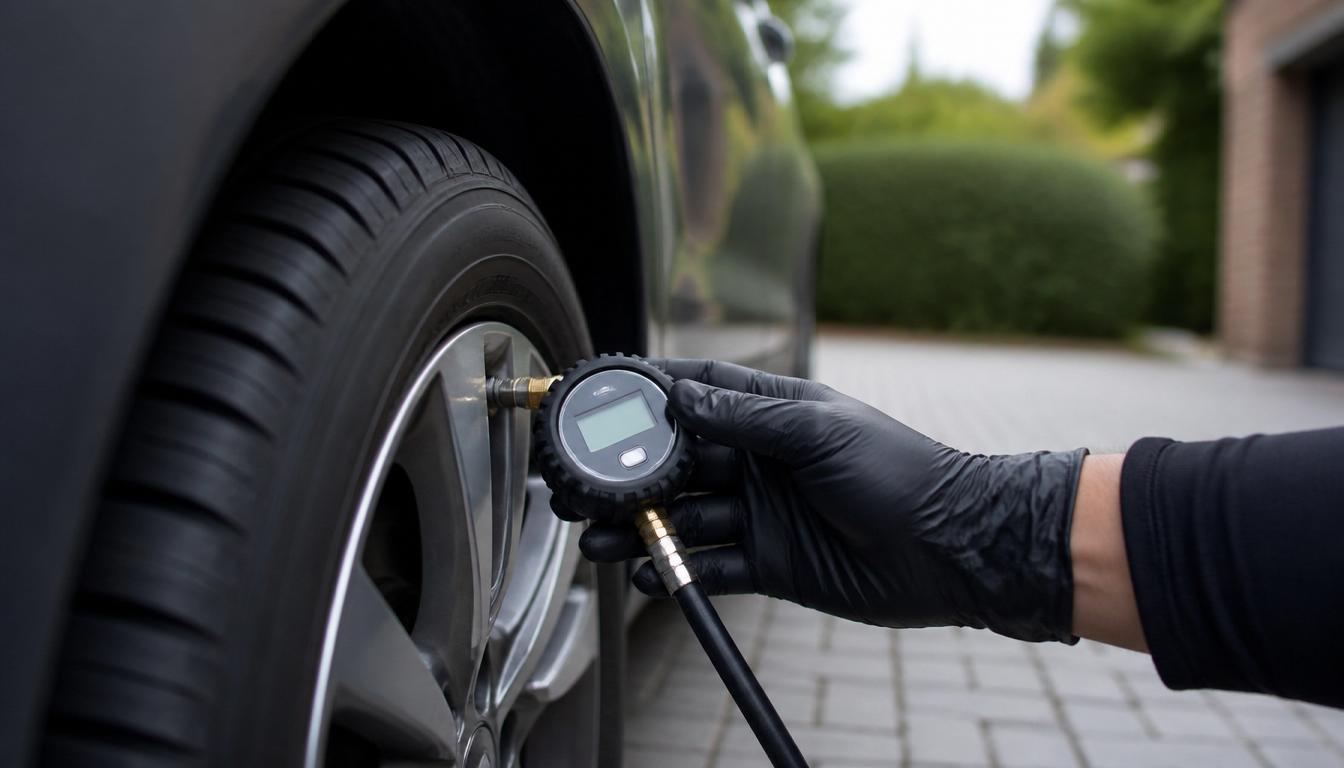
When fuel prices rise, most people start looking for ways to save money.
They might drive more gently, avoid unnecessary trips or look for cheaper fuel stations.
Yet one of the simplest ways to improve fuel economy is often completely overlooked.
Your tyre pressure.
A difference of just a few PSI (pounds per square inch) can affect fuel consumption, tyre life, braking distance, steering response, ride comfort, vehicle handling and safety in wet conditions.
The frustrating part?
Most drivers don't realise their tyres are underinflated until they become noticeably flat.
By then, they've often been wasting fuel and wearing their tyres out prematurely for weeks—or even months.
The good news is that checking your tyre pressure takes less than five minutes and could save you money every time you drive.
Your tyres are the only part of your vehicle that actually touches the road.
Think about that for a moment.
Four contact patches, each roughly the size of your hand, are responsible for accelerating your vehicle, steering, braking, cornering and supporting the entire weight of your car.
When tyre pressure is incorrect, those contact patches change shape.
That affects how efficiently your vehicle rolls along the road.
The harder your engine has to work, the more fuel it uses.
When tyres don't contain enough air, they flatten slightly where they contact the road.
This increases something called rolling resistance.
Rolling resistance is simply the force required to keep the tyre moving.
The greater the rolling resistance:
Even a relatively small drop in pressure can make your vehicle less efficient.
While the exact impact varies depending on the vehicle, driving conditions and tyre type, consistently underinflated tyres can noticeably increase fuel consumption over time.
If you drive 20,000 kilometres a year, even a modest reduction in fuel efficiency can add up to a significant amount.
Incorrect tyre pressure affects much more than your wallet.
It can influence road grip, emergency braking, cornering stability, aquaplaning resistance, tyre lifespan, ride quality and steering precision.
In other words, tyre pressure is both an economy issue and a safety issue.
This is by far the most common problem mechanics see.
The engine works harder because of increased rolling resistance.
Underinflated tyres often wear excessively on the outer edges.
Instead of wearing evenly across the tread, both shoulders begin wearing more quickly.
This can dramatically shorten tyre life.
Tyres that flex excessively don't respond as predictably under heavy braking.
Stopping distances may increase, particularly in wet conditions.
Many drivers describe the steering as heavy, sluggish, soft or less responsive.
Low-pressure tyres flex more.
That flexing generates heat.
Excessive heat accelerates tyre deterioration and, in severe cases, can contribute to tyre failure.
Many people assume "more air is better."
It isn't.
Overinflated tyres can also create problems.
These include:
Many people believe tyres only lose air when punctured.
In reality, every tyre slowly loses pressure over time.
Air naturally escapes through the rubber itself, valve stems and wheel beads.
Temperature changes also affect pressure.
This is completely normal.
Most tyres lose a small amount of pressure every month.
That's why regular checks are important.
Temperature has a significant effect on tyre pressure.
As temperatures drop, air contracts and tyre pressure decreases.
As temperatures rise, air expands and pressure increases.
This is why tyre pressures should always be checked when the tyres are cold—not after driving.
Even though much of New Zealand enjoys relatively mild weather, overnight temperature changes can still affect tyre pressure.
A good habit is at least once every month.
You should also check before long road trips, carrying heavy loads, towing a trailer, family holidays and long weekends.
It only takes a few minutes.
Many people look at the number printed on the tyre.
That is usually not the correct pressure for everyday driving.
Instead, look for the manufacturer's recommended pressure.
This is commonly found inside the driver's door opening, inside the fuel filler flap or in the owner's manual.
Front and rear tyre pressures may be different.
If you're carrying heavy loads or towing, the manufacturer may recommend higher pressures.
Always follow the vehicle manufacturer's guidance rather than the maximum pressure printed on the tyre sidewall.
The process is simple.
Check the tyres before driving. Tyres should be cold.
Remove the valve cap.
Use a reliable tyre pressure gauge. Digital gauges are generally easier to read, but good-quality analogue gauges are also effective.
Compare the reading with the recommended pressure.
Inflate or deflate as required.
Replace the valve cap.
Repeat for every tyre.
Don't forget the spare if your vehicle has one.
Absolutely.
Many people don't discover their spare tyre is flat until they actually need it.
If your vehicle has a full-size or space-saver spare, include it in your monthly pressure check.
Many modern vehicles have TPMS.
These systems are excellent safety features, but they have limitations.
Some systems only alert you after pressure has dropped significantly.
By then, fuel economy may already be affected and tyre wear may already be occurring.
Think of TPMS as a backup—not a replacement for regular checks.
Your tyres can tell a story.
Usually indicates low tyre pressure.
Often indicates excessive tyre pressure.
May indicate wheel alignment problems or suspension issues.
Can be associated with suspension wear, wheel balancing problems or shock absorber issues.
If your tyres are wearing unevenly, simply inflating them correctly won't always solve the underlying problem.
Yes—and arguably even more so.
Electric vehicles are generally heavier than petrol vehicles because of their battery packs.
Correct tyre pressure helps maximise driving range, improve tyre life, optimise efficiency and maintain handling.
Many EV manufacturers place particular emphasis on maintaining recommended tyre pressures.
False. A tyre can be significantly underinflated while still looking normal.
Tyre pressure changes throughout the year. Monthly checks are far better.
Only up to the manufacturer's recommended pressure. Overinflation creates its own problems.
It doesn't. That number usually indicates the tyre's maximum allowable pressure, not your vehicle's recommended operating pressure.
The exact amount depends on the vehicle and driving conditions. Maintaining correct tyre pressure helps your vehicle operate more efficiently and may reduce unnecessary fuel consumption over time.
Not always. Many vehicles require different front and rear pressures. Always follow the manufacturer's specifications.
A tyre may fail a WoF if it is obviously underinflated to the point where it affects safety, or if associated issues such as damage or insufficient tread are present. However, don't wait until your WoF to check tyre pressures. Monthly checks are best.
Possible causes include punctures, damaged valves, wheel leaks and tyre damage. If you're repeatedly adding air, the tyre should be inspected.
Yes. Check them while cold before leaving. This is especially important if you're travelling with passengers or luggage.
Checking tyre pressure is one of the easiest maintenance tasks you can perform.
Yet it can improve fuel economy, tyre lifespan, vehicle safety, driving comfort and handling.
Five minutes each month can potentially save hundreds of dollars in unnecessary fuel and premature tyre replacement.
More importantly, correctly inflated tyres help keep you and your family safer on New Zealand's roads.
At Sonic On-Site Solutions, we provide convenient mobile vehicle inspections throughout Greater Auckland.
If you're unsure about your tyre condition or you've noticed uneven wear, poor handling or increased fuel consumption, we can inspect your vehicle at your home or workplace.
Our tyre and vehicle inspection services include:
We'll explain what we find in plain English, helping you make informed decisions about your vehicle without unnecessary repairs.