
How Often Should You Service Your Car? The Complete Guide for New Zealand Drivers
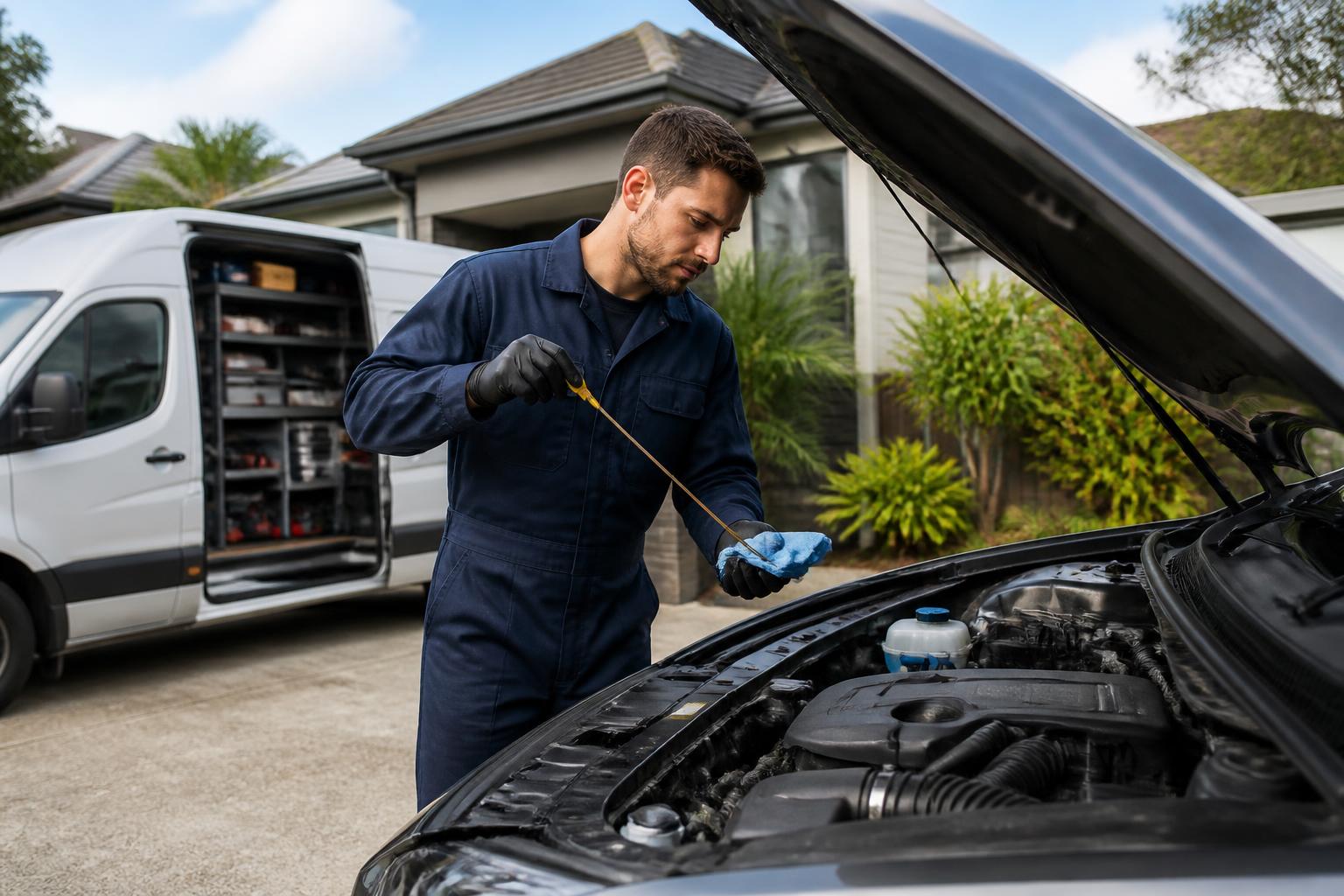
Regular Servicing Is One of the Best Investments You Can Make
Many people think of servicing as an unnecessary expense—something to delay until the car starts making a strange noise or a warning light appears.
Unfortunately, by the time your vehicle is showing obvious symptoms, a relatively inexpensive service may have turned into a much larger repair bill.
Routine servicing is preventative maintenance. It helps identify wear before components fail, keeps your vehicle operating efficiently and can significantly extend its lifespan.
Whether you drive a small hatchback around Auckland, a family SUV, a ute for work or a hybrid, every vehicle benefits from regular servicing.
Modern vehicles are incredibly reliable, but they still rely on hundreds of moving parts that wear over time. Oil breaks down, filters become blocked, brake components wear, belts age, batteries weaken and fluids gradually lose their protective properties.
Regular servicing isn't just about keeping your car running—it is about keeping it safe, reliable and economical.
How Often Should You Service Your Car?
The simplest answer is:
Follow your vehicle manufacturer's service schedule.
Every vehicle is different.
Some manufacturers recommend servicing every:
- 10,000 kilometres
- 15,000 kilometres
- 20,000 kilometres
Others specify servicing every:
- 6 months
- 12 months
- 18 months
—whichever comes first.
That "whichever comes first" is important.
Even if you've only driven 5,000 kilometres during the year, engine oil continues to age and absorb contaminants.
Time matters just as much as distance.
If you're unsure, your owner's manual contains the recommended service intervals.
Why Do Manufacturers Specify Service Intervals?
Modern engines are built to tight tolerances.
Engine oil doesn't simply lubricate moving parts.
It also:
- Reduces friction
- Helps cool the engine
- Suspends contaminants
- Protects against corrosion
- Cleans internal components
- Prevents sludge build-up
As oil ages it gradually loses these protective properties.
Eventually it becomes less effective at protecting the engine.
Replacing oil and filters before they deteriorate too far is significantly cheaper than replacing an engine.
What Happens During a Routine Service?
A quality service is much more than changing the engine oil.
Although every vehicle differs, a routine service may include:
Engine oil replacement
Fresh oil helps protect moving engine components and maintain proper lubrication.
Oil filter replacement
The filter removes contaminants from the oil.
Replacing the oil without replacing the filter is generally false economy.
Air filter inspection
A dirty air filter can reduce engine efficiency and fuel economy.
Depending on its condition, it may be cleaned or replaced.
Cabin filter inspection
The cabin filter helps keep dust, pollen and pollutants out of the passenger compartment.
Replacing it improves cabin air quality and air-conditioning performance.
Brake inspection
Your mechanic may inspect:
- Brake pads
- Brake discs
- Brake fluid
- Brake hoses
- Handbrake operation
Brake wear is often identified long before it becomes dangerous.
Tyre inspection
Checking:
- Tread depth
- Uneven wear
- Tyre pressures
- Sidewall damage
Tyres provide your vehicle's only contact with the road.
Battery test
Rather than waiting until the battery fails, testing can identify a weakening battery before it leaves you stranded.
Cooling system inspection
Checking:
- Coolant level
- Hoses
- Radiator
- Water pump
- Leaks
Overheating can quickly cause severe engine damage.
Steering and suspension inspection
Components such as:
- Ball joints
- Tie rod ends
- Shock absorbers
- Bushes
may be inspected for wear.
Fluid checks
Including:
- Brake fluid
- Coolant
- Power steering fluid (where applicable)
- Windscreen washer fluid
- Transmission fluid (where applicable)
Drive belts
Belts are checked for:
- Cracks
- Fraying
- Wear
- Incorrect tension
General safety inspection
Many mechanics also perform a visual inspection looking for:
- Fluid leaks
- Exhaust problems
- Loose components
- Corrosion
- Damaged hoses
- Electrical issues
Why Regular Servicing Saves Money
Some drivers skip servicing because they want to save a few hundred dollars.
Ironically, this often leads to much larger repair bills.
For example:
Replacing engine oil:
Approximately a few hundred dollars.
Replacing an engine damaged by poor lubrication:
Potentially several thousand dollars.
Similarly:
Replacing worn brake pads is considerably cheaper than replacing brake pads and damaged brake discs.
Small problems become expensive problems when ignored.
Signs Your Vehicle Needs a Service Sooner
Even if your next scheduled service isn't due, your vehicle may still need attention.
Watch for:
- Warning lights
- Strange noises
- Rough idling
- Reduced power
- Poor fuel economy
- Vibrations
- Fluid leaks
- Burning smells
- Difficulty starting
- Excessive exhaust smoke
- Steering changes
- Brake noises
Never assume the next scheduled service is the appropriate time if your vehicle is already showing symptoms.
Do Short Trips Count as Severe Driving?
Yes.
Many Auckland drivers only travel:
- School drop-offs
- Grocery shopping
- Commuting a few kilometres
These short journeys can actually be harder on a vehicle than regular highway driving.
Why?
Because the engine often doesn't reach full operating temperature.
This can lead to:
- Moisture contamination in the oil
- Increased engine wear
- Carbon build-up
- Reduced battery charging
- Faster oil deterioration
Vehicles driven mostly on short trips may benefit from more frequent servicing.
What About Highway Driving?
Generally, steady highway driving is easier on a vehicle.
The engine reaches normal operating temperature and operates more efficiently.
However, long-distance driving still contributes to:
- Oil degradation
- Tyre wear
- Brake wear
- Suspension wear
Distance still matters.
Does My Driving Style Affect Service Intervals?
Absolutely.
Your vehicle experiences more wear if you regularly:
- Tow trailers
- Carry heavy loads
- Drive on gravel roads
- Sit in heavy traffic
- Frequently accelerate hard
- Drive in hilly areas
These conditions place greater demands on:
- Engine
- Transmission
- Cooling system
- Brakes
- Suspension
Can I Just Wait Until Something Breaks?
You can.
But it's rarely the cheapest option.
Think of servicing like visiting the dentist.
A regular check-up usually costs far less than waiting until you need emergency treatment.
Preventative maintenance almost always saves money over the life of the vehicle.
What's the Difference Between a Service and a WoF?
Many people confuse these.
A WoF checks whether your vehicle meets minimum safety standards on the day of inspection.
It does not include:
- Engine oil replacement
- Filter replacement
- Comprehensive engine checks
- Scheduled maintenance
- Manufacturer servicing
A service is preventative maintenance designed to keep your vehicle operating properly.
Passing a WoF does not mean your vehicle has been serviced.
Likewise, a recently serviced vehicle can still fail a WoF if a safety-related fault is found.
Ideally, both should form part of your regular vehicle maintenance.
What Happens If You Never Change Your Oil?
This is one of the most damaging forms of neglected maintenance.
Old engine oil gradually:
- Thickens
- Becomes contaminated
- Loses lubrication properties
- Forms sludge
- Reduces cooling efficiency
Over time this can lead to:
- Increased engine wear
- Timing chain problems
- Oil pressure issues
- Turbocharger damage
- Complete engine failure
An oil change is one of the least expensive maintenance tasks.
Ignoring it can become one of the most expensive mistakes a vehicle owner makes.
Should You Use Genuine Parts?
It depends.
Quality aftermarket parts often perform extremely well.
However, poor-quality replacement parts can reduce reliability.
A reputable mechanic will recommend components appropriate for your vehicle, budget and intended use.
Choosing the cheapest available part is not always the best long-term decision.
Hybrid and Electric Vehicles Still Need Servicing
A common misconception is that hybrid and electric vehicles require no maintenance.
While they don't require traditional engine servicing in the same way, they still need regular inspections.
Items that still wear include:
- Brakes
- Suspension
- Steering
- Tyres
- Cabin filters
- Cooling systems
- Batteries
- Wipers
Electric vehicles generally require less routine maintenance than petrol vehicles, but they are certainly not maintenance-free.
Common Servicing Myths
"My car is running fine, so it doesn't need servicing."
Many serious mechanical issues develop long before noticeable symptoms appear.
Regular servicing helps detect these early.
"I don't drive enough to need a service."
Time is just as important as kilometres.
Oil deteriorates even when the vehicle isn't driven much.
"A WoF replaces a service."
It doesn't.
A WoF is a safety inspection.
A service is preventative maintenance.
"Modern cars don't need servicing as often."
Service intervals have generally increased, but regular servicing remains essential.
Skipping maintenance can shorten the life of even the most modern vehicle.
Frequently Asked Questions
Should I service my vehicle every year?
For most privately owned vehicles, annual servicing is a sensible minimum unless the manufacturer specifies a shorter interval or you exceed the recommended kilometres sooner.
Can I service my own vehicle?
Some owners perform their own maintenance.
However, professional servicing often identifies issues that require specialised knowledge or equipment.
Keeping accurate service records is also beneficial when selling your vehicle.
Is servicing worth it on an older car?
Absolutely.
Older vehicles often benefit even more from regular maintenance because components naturally wear with age.
What happens if I miss one service?
Missing one service doesn't automatically damage your vehicle.
However, repeatedly delaying maintenance increases wear and raises the likelihood of more expensive repairs.
Why does my service reminder come on even though the car feels fine?
Many vehicles calculate service intervals based on time, distance or driving conditions.
The reminder is there to encourage preventative maintenance before problems develop.
Protect Your Investment
For most New Zealanders, a vehicle is one of the largest purchases they'll ever make.
Regular servicing protects that investment.
It helps maintain:
- Reliability
- Fuel economy
- Performance
- Safety
- Resale value
Most importantly, it provides peace of mind.
Knowing your vehicle has been professionally inspected reduces the likelihood of unexpected breakdowns and expensive repairs.
Need Your Vehicle Serviced? We Come to You
At Sonic On-Site Solutions, we provide convenient mobile vehicle servicing throughout Greater Auckland. Instead of spending half your day sitting in a workshop waiting room, we bring professional servicing directly to your home or workplace.
- Scheduled servicing
- Oil and filter changes
- Battery testing
- Brake inspections
- Fluid checks
- Vehicle health inspections
- Pre-WoF servicing
- Diagnostic checks
No towing. No waiting at a workshop. Just honest advice and professional service brought directly to your location.