
3 Signs Your Brakes Need Attention (Before They Become Dangerous)
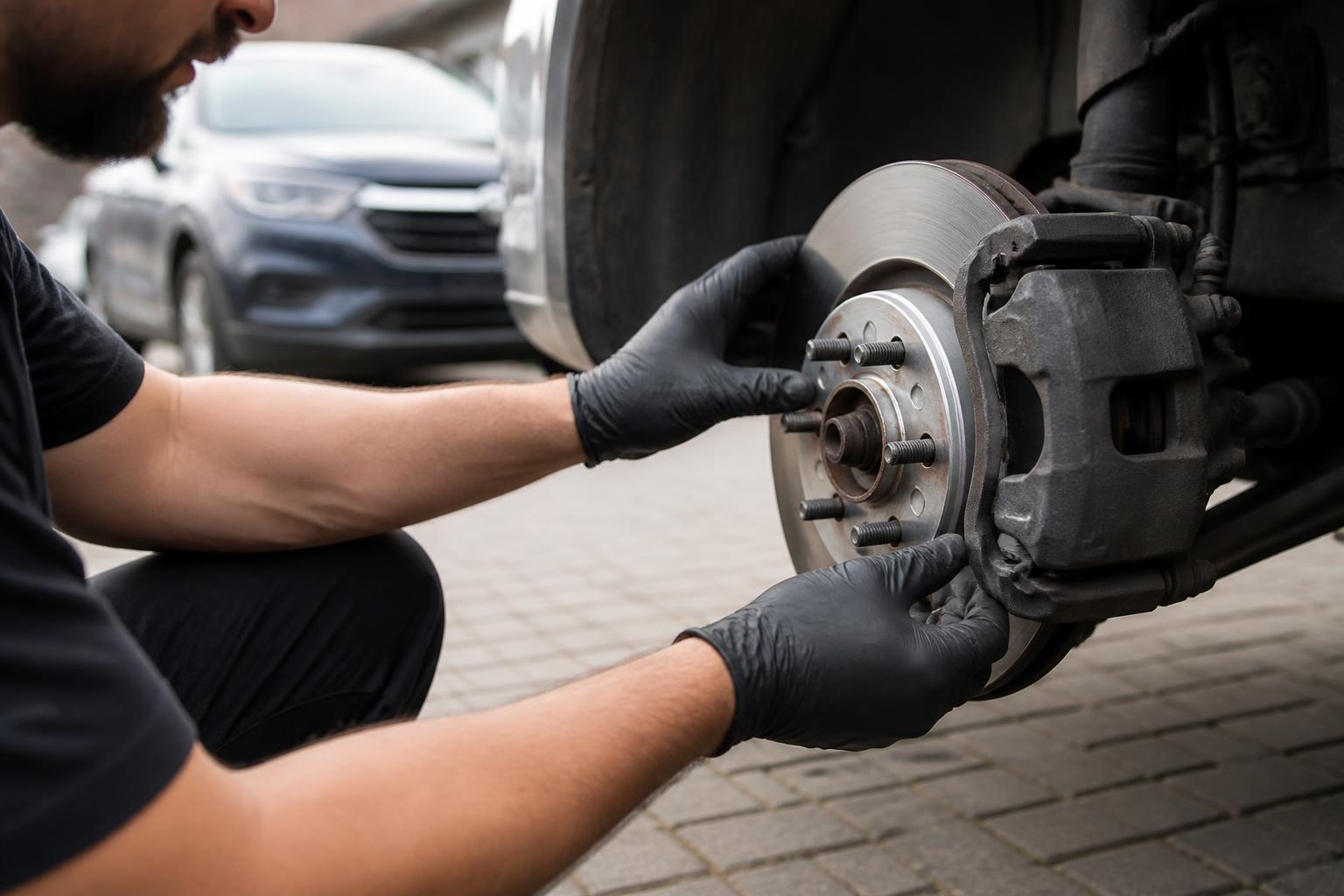
Your Brakes Are Your Vehicle's Most Important Safety System
Every time you drive, you rely on your brakes without giving them much thought.
Whether you're stopping at traffic lights, avoiding a distracted driver, or slowing down on a wet Auckland motorway, your braking system is working incredibly hard.
Unlike your engine, your brakes are designed to wear out.
That's right—they're consumable components.
Brake pads, discs, rotors and other parts gradually wear every time you press the brake pedal. That's completely normal.
The problem begins when those worn components are ignored.
A small squeak today can become an expensive repair tomorrow.
More importantly, worn brakes can increase stopping distances and compromise your ability to avoid an accident.
Fortunately, your vehicle usually provides warning signs before brake failure occurs.
Knowing what those signs are could save you thousands of dollars—and potentially prevent an accident.
How Do Your Brakes Actually Work?
Before looking at the warning signs, it helps to understand what happens every time you press the brake pedal.
When you apply the brakes:
- The brake pedal activates the braking system.
- Hydraulic brake fluid transfers pressure.
- Brake calipers squeeze the brake pads.
- The brake pads press against the brake discs (rotors).
- Friction slows the wheels.
- Your vehicle comes to a stop.
Every stop removes a tiny amount of brake pad material.
Over thousands of kilometres, those pads gradually become thinner until they require replacement.
The brake discs also wear over time, although they generally last much longer than the pads.
Why Brake Maintenance Matters
Many drivers wait until the brakes start making loud noises before having them checked.
Unfortunately, by then the repair is often more expensive than it needed to be.
For example:
Replacing worn brake pads is relatively inexpensive.
Allowing those worn pads to grind into the brake discs often means replacing both the pads and the discs.
Preventative maintenance almost always costs less than reactive repairs.
Sign 1: Your Brakes Are Making Unusual Noises
This is the warning sign most drivers notice first.
Squeaking or Squealing
A high-pitched squeal is often caused by brake wear indicators.
Many brake pads include a small metal tab designed to contact the brake disc once the pad reaches a certain level of wear.
This creates a squealing sound that alerts you before the pads wear out completely.
Other possible causes include:
- Dust on the brakes
- Moisture after rain
- Glazed brake pads
- Low-quality brake pad material
A brief squeak on a damp morning isn't always cause for concern.
However, persistent squealing should be inspected.
Grinding Noise
Grinding is much more serious.
This often means the brake pad material has worn away completely, allowing metal to contact metal.
Continuing to drive in this condition can damage:
- Brake discs
- Brake calipers
- Wheel bearings
- Other braking components
Grinding brakes should be inspected immediately.
Ignoring them usually turns a simple repair into a much larger one.
Clicking or Clunking
Less common but still important.
These noises may indicate:
- Loose brake components
- Worn caliper hardware
- Suspension issues
- Steering components
Because several systems can produce similar noises, professional diagnosis is recommended.
Sign 2: The Brake Pedal Feels Different
Your brake pedal should feel consistent every time you drive.
Any noticeable change deserves attention.
Soft or Spongy Brake Pedal
If the pedal sinks further than usual or feels soft, possible causes include:
- Air in the brake lines
- Brake fluid leaks
- Moisture-contaminated brake fluid
- Master cylinder issues
This reduces braking confidence and should never be ignored.
Hard Brake Pedal
A pedal that suddenly becomes much harder to press may indicate:
- Brake booster issues
- Vacuum problems
- Hydraulic faults
Stopping distances can increase significantly.
Brake Pedal Pulsation
Does the brake pedal vibrate while braking?
Possible causes include:
- Brake disc thickness variation
- Brake disc distortion
- Suspension problems
Some drivers describe this as:
“The steering wheel shakes every time I brake.”
This symptom should be investigated rather than ignored.
Sign 3: Your Vehicle Doesn't Brake Normally
Sometimes your vehicle tells you there's a problem through its behaviour rather than through noise.
The Vehicle Pulls to One Side
If your vehicle drifts left or right while braking, possible causes include:
- Sticking brake caliper
- Uneven brake wear
- Tyre issues
- Suspension faults
- Brake hose problems
A vehicle should brake in a straight line under normal conditions.
Increased Stopping Distance
If your car simply doesn't stop as quickly as it used to, don't assume it's your imagination.
Reduced braking performance may result from:
- Worn brake pads
- Overheated brakes
- Poor-quality brake components
- Brake fluid problems
- Hydraulic faults
Never ignore increasing stopping distances.
Brake Warning Light
Modern vehicles monitor many aspects of the braking system.
Dashboard warnings may indicate:
- Low brake fluid
- Brake system faults
- Electronic parking brake issues
- ABS problems
A warning light should always be investigated.
It may indicate a minor issue—or something requiring immediate attention.
Other Warning Signs Many Drivers Miss
Brakes don't always announce problems loudly.
Watch for:
Burning Smell
After normal driving, a burning smell may indicate:
- Sticking brake caliper
- Overheated brakes
- Parking brake not fully released
Vibration Through the Steering Wheel
Often noticeable during braking.
Possible causes include:
- Brake discs
- Suspension
- Steering components
Brake Fluid Leaks
Brake fluid should never leak.
If you notice fluid around the wheels or underneath the vehicle, have it inspected immediately.
Brake fluid leaks reduce braking performance and are a serious safety concern.
Handbrake Doesn't Hold Properly
Whether your vehicle has:
- Traditional handbrake
- Foot-operated parking brake
- Electronic parking brake
It should securely hold the vehicle on a hill.
If it doesn't, it requires attention.
What Causes Brakes to Wear Faster?
Several factors influence brake life.
Stop-Start Traffic
Auckland drivers spend a lot of time in traffic.
Constant braking naturally wears brake pads faster.
Driving Style
Hard braking increases wear considerably.
Gentle, anticipatory driving generally extends brake life.
Vehicle Weight
Heavier vehicles naturally require more braking force.
SUVs and utes often wear brakes faster than smaller hatchbacks.
Towing
Regular towing places extra demands on the braking system.
Servicing becomes even more important.
Driving in Hills
Frequent downhill driving generates additional heat and wear.
Using appropriate gears when descending helps reduce brake load.
How Long Do Brake Pads Last?
There is no fixed answer.
Brake pad life varies enormously.
Some drivers replace pads after:
- 30,000 km
Others achieve:
80,000 km or more.
It depends on:
- Driving style
- Traffic conditions
- Vehicle weight
- Brake material
- Terrain
Rather than focusing on kilometres, regular inspections are the best approach.
What Happens During a Brake Inspection?
A professional brake inspection may include checking:
- Brake pad thickness
- Brake disc condition
- Brake fluid
- Brake hoses
- Brake calipers
- Brake lines
- Parking brake
- ABS warning lights
- Brake performance
Can Brake Fluid Go Bad?
Yes.
Brake fluid absorbs moisture from the atmosphere over time.
This reduces its effectiveness.
Old brake fluid may contribute to:
- Reduced braking performance
- Internal corrosion
- Lower boiling point
Manufacturers specify replacement intervals for good reason.
Replacing brake fluid is preventative maintenance that helps protect the entire braking system.
What Is ABS?
ABS stands for:
- Anti-lock Braking System
It helps prevent the wheels locking during heavy braking.
This improves steering control during emergency stops.
If the ABS warning light appears:
The normal braking system may still function.
However, the anti-lock feature may not operate correctly.
Arrange diagnosis as soon as possible.
Can I Drive With Worn Brakes?
It depends on the severity.
Minor brake wear identified during routine servicing may simply mean planning a repair soon.
However, you should stop driving and arrange immediate inspection if you experience:
- Grinding brakes
- Severe pulling
- Major loss of braking
- Brake warning lights
- Fluid leaks
- Burning smells
- Brake pedal sinking to the floor
Brakes are not a system where “waiting another month” is a good idea.
Common Brake Myths
“The squeaking will go away.”
Sometimes it does.
Sometimes it's the last warning before expensive damage occurs.
“I only need new brake pads.”
Maybe.
The discs, calipers and hydraulic system also require inspection.
“ABS means I can stop quicker.”
Not necessarily.
ABS helps maintain steering control.
Safe following distances remain essential.
“Brake fluid never needs changing.”
False.
Brake fluid ages just like engine oil.
Frequently Asked Questions
How often should my brakes be inspected?
A visual inspection during every routine service is good practice.
If you notice any unusual symptoms, have them checked sooner.
Why do my brakes squeak only in the morning?
Moisture on the brake discs after overnight condensation is common.
If the noise disappears quickly, it may be normal.
Persistent squeaking should be investigated.
How much do brake repairs cost?
It depends on what requires replacement.
Replacing brake pads is generally much less expensive than replacing pads, discs and calipers after prolonged wear.
Early inspection usually saves money.
Can I replace brake pads myself?
Some experienced vehicle owners do.
However, brakes are a critical safety system.
If you're unsure, professional servicing is strongly recommended.
Do electric vehicles need brake servicing?
Yes.
Although regenerative braking can reduce brake wear, EVs still require regular brake inspections.
Components can still corrode or seize if left unchecked.
Don't Ignore the Warning Signs
Your braking system rarely fails without providing warning signs first.
Listen to your vehicle.
If your brakes:
- Squeal
- Grind
- Vibrate
- Pull
- Feel different
- Display warning lights
Arrange an inspection as soon as possible.
Small brake problems are usually straightforward to fix.
Large brake problems often begin as small ones that were ignored.
Your safety—and the safety of everyone else on the road—is worth far more than delaying a brake inspection.
Need Your Brakes Checked? We Come to You
At Sonic On-Site Solutions, we provide mobile brake inspections across Greater Auckland. Whether you're hearing unusual noises, your brake pedal feels different or you're preparing for a WoF, we'll come to your home or workplace and assess your braking system.
- Brake inspections
- Brake pad replacement
- Brake disc assessment
- Brake fluid inspection
- Brake warning light diagnosis
- Pre-WoF brake checks
- General braking system assessments
No workshop waiting rooms. No unnecessary stress. Just honest advice and professional mobile service.